Skip to content

Tank and Line Integrity Testing

Detect leaks early, reduce environmental and operational risk,
and maintain confidence in your underground fuel system.

247 Service Support

What is Integrity Testing?

Tank and line integrity testing checks whether underground fuel tanks and associated pipework are maintaining full containment. It helps identify leaks, water ingress and other integrity issues in new, repaired and existing fuel systems.

Nqpetro uses Titan Cloud’s advanced precision testing technology, combining mass-based volumetric testing with digital sensors and analysis software to detect small leaks and assess system integrity, including the wet space containing fuel, the ullage above the fuel, the interstice between double tank walls and associated fuel lines.

The system captures measurable test data in real time, giving our technicians immediate feedback to investigate issues while on site. Test results are reviewed by third-party engineers and documented in a clear digital report, helping operators make informed decisions about maintenance, repairs and compliance.
Tank and Line Testing

Advanced testing. Reliable results. Expert review.

Precision leak detection

Digital sensors measure pressure or vacuum changes in pascals and liquid-level changes as small as 0.001 mm (1 micron), helping identify minute liquid movement and potential leaks.

Real-time digital results

Mass-based volumetric testing and digital analysis provide repeatable results in wet and dry conditions. Immediate feedback helps technicians investigate leaks, water ingress and equipment issues while on site.

Certified testing methods

Wet-tank, ullage and line testing methods are independently certified to U.S. EPA performance standards. Documented results support integrity-testing requirements under AS 4897 and applicable state and territory environmental requirements.

Third-party Review

Qualified third-party engineers review every test, analysing recorded data and leak-detection patterns to determine the final results. A clear digital report documents the findings and any issues requiring attention.

Why It Matters

Small issues within an underground fuel system can quickly become major operational and environmental problems if they go undetected. Leaks, water ingress, and line integrity issues can result in product loss, contamination, downtime, compliance concerns, and costly rectification works. Tank and line integrity testing helps uncover these issues early, reducing risk and giving operators greater confidence in the condition of their fuel system.

Leak_1

Leaks

Water Ingress

Downtime

Compliance

How it works

Tank integrity testing.
Ullage space Pressure or vacuum monitoring Wet space Continuous mass readings
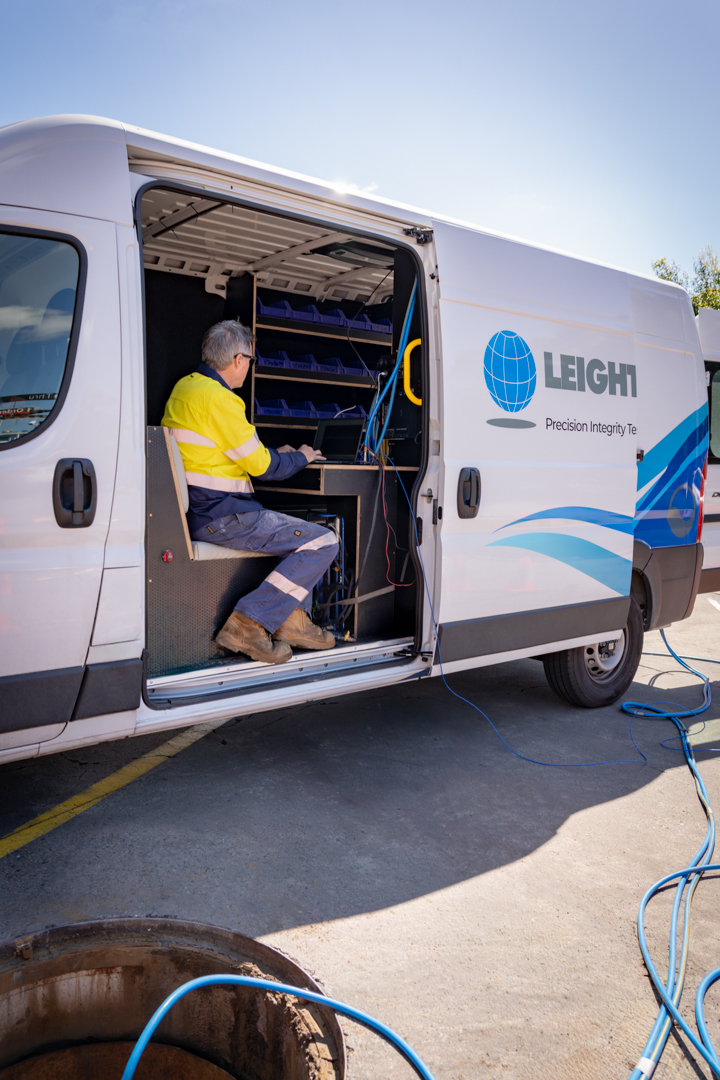
Technician seated inside the open testing van
  1. Establish a safe work area

    Our technician sets up a safe work area and prepares the equipment for testing.

  2. Begin continuous mass readings

    Controlled nitrogen bubbles create a pressure signal in the wet space. Sensors continuously record this response to detect minute changes in the mass of fuel.

  3. Apply pressure or vacuum to the ullage space

    Nitrogen pressure or vacuum is applied to the space above the fuel, known as the ullage space. Sensors monitor changes to assess containment.

  4. Conduct simultaneous testing

    Wet and ullage spaces are tested simultaneously, with real-time feedback helping our technician assess tank integrity while on site.

  5. Analyse the data

    Recorded test data is reviewed by third-party engineers to assess tank integrity.

  6. Provide a digital report

    A digital report documents the results and findings, providing a clear record for maintenance planning and record keeping.

HOW IT WORKS

Precision Line Testing.

When Testing May Be Needed

Tank and line integrity testing may be required when there are concerns about the condition or performance of an underground fuel system. It is commonly used to investigate potential issues, verify system integrity, and provide greater confidence before problems escalate.

Testing may be needed when:

  • product loss or unexplained fuel variance is suspected
  • water ingress is affecting fuel quality or system performance
  • a leak or line integrity issue needs to be investigated
  • a tank or line has been repaired and needs to be verified
  • a new installation requires confirmation before operation
  • operators want greater confidence in the ongoing condition of their fuel system
  • Test acquired sites before transaction close
Tank and Line Testing

Frequently Asked Questions

What is tank and line integrity testing?

Tank and line integrity testing checks whether underground fuel tanks and associated pipework are maintaining full containment. It helps identify leaks, water ingress and other integrity issues that could lead to product loss, contamination or operational disruption.

When should a fuel system be tested?

Testing may be needed when there is unexplained fuel loss, water ingress or concern about a potential leak. It is also used for new installations, upgrades, repairs and modifications, to support compliance requirements, or to assess system integrity when buying or selling a fuel site.

Who carries out the testing, and what technology is used?

Nqpetro’s technicians carry out tank and line integrity testing across Australia using Titan Cloud’s advanced precision testing technology. The system combines mass-based volumetric testing, digital sensors and analysis software to detect small leaks and assess system integrity, supported by our technicians’ practical experience in fuel infrastructure.

What is pre-bury testing?

Pre-bury testing checks a newly installed fuel system before tanks, lines and connections are covered by backfill or paving. This allows any identified issues to be addressed while the components are still accessible.

What is post-bury testing?

Post-bury testing checks system integrity after backfilling and construction work. It helps identify leaks or integrity issues that may have developed during these activities, supporting verification before the system enters service.

Are the test results reviewed

Yes. All tests undergo review by third-party engineers as part of Titan Cloud’s testing process. Nqpetro provides a digital report outlining the results and findings, giving you a clear record of the condition of the tested system

Can multiple fuel lines be tested at the same time?

Yes. The precision testing technology we use supports simultaneous testing of multiple fuel lines, helping reduce the time required to complete line testing on site

Can fuel lines be tested while empty?

Yes. Titan Cloud’s technology supports dry line testing, allowing empty fuel lines to be checked for integrity issues. Contact our team to discuss your site’s testing requirements.

Do you provide tank and line testing Australia-wide?

Yes. Nqpetro provides tank and line integrity testing services Australia-wide, supporting retail and commercial fuel operators. Contact our team with your site location and requirements to arrange testing.

Request Tank and Line Integrity Testing

Contact Nqpetro to book testing or discuss your site requirements.

Send an email

Contact us

1800 451 770

Partners-cobranded-logo - Nqpetro

Why Choose Us

Australia-Wide
National Support

Nqpetro supports customers right across Australia, with teams in Perth, Brisbane, Melbourne, Cairns and regional centres. Wherever your site is located – metro, regional or remote – Our team of experienced technicians are ready to assist.​

National Leaders In
Hydrocarbon Solutions

From retail fuel sites to major fuel and lubricant farms, our team of experts can design, fabricate and install custom fuel solutions to suit your needs. We specialise in systems for mining, transport and logistics, agriculture, aviation, fuel distributors, industrial sites and government / council depots.​

Experts in Service
& Maintenance

Our highly qualified technicians are on call 24/7 to support retail fuel sites and fuel systems across Australia. We provide both preventative and reactive maintenance to keep your operation running safely and efficiently, minimising downtime and protecting your assets. ​